
Last updated November 15, 2026
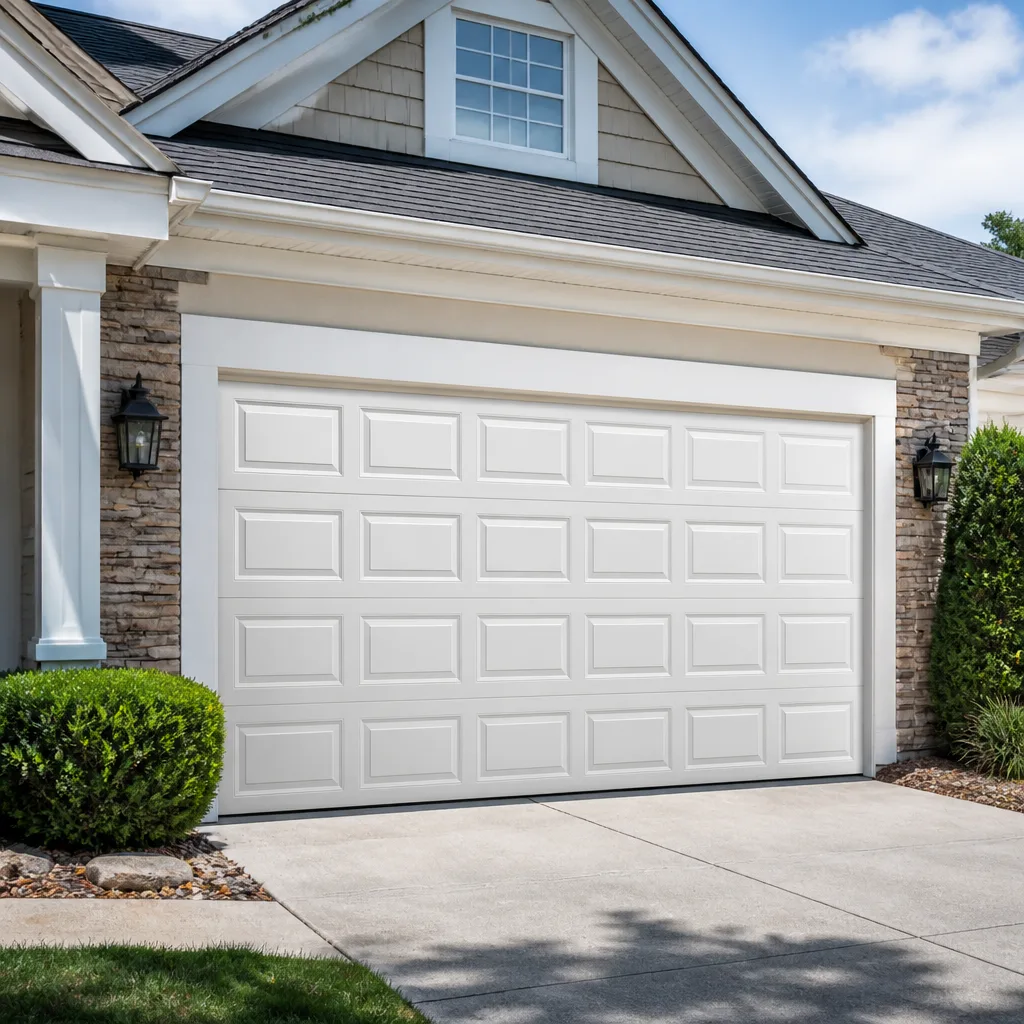 Raised-panel steel
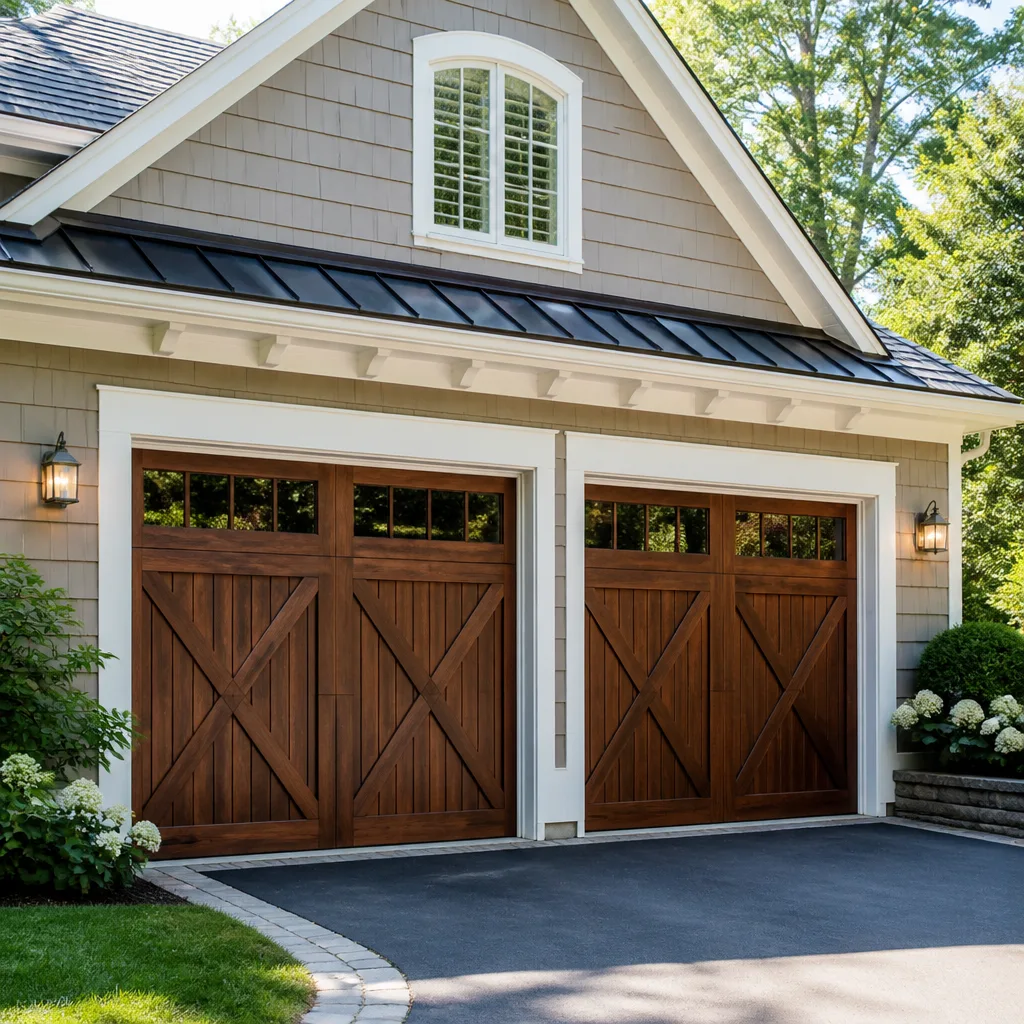 Carriage house
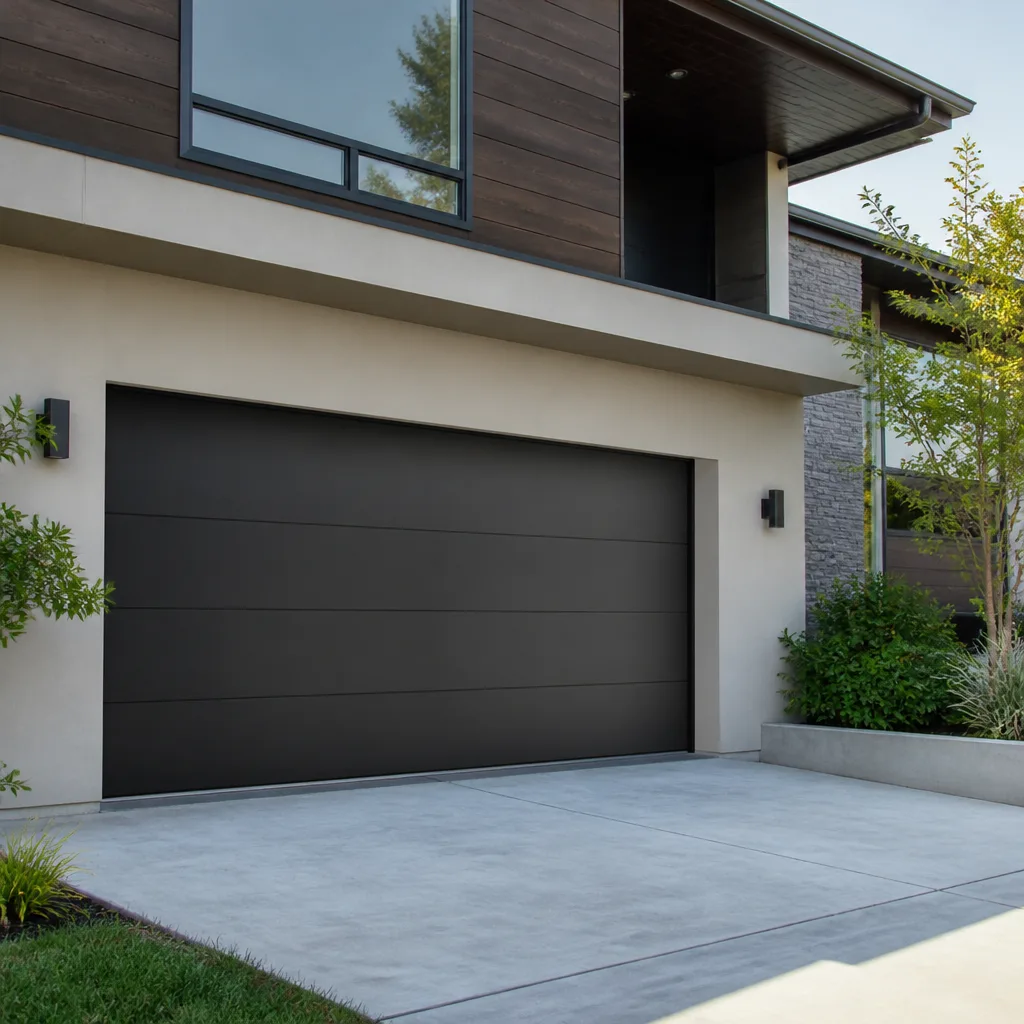 Modern flush
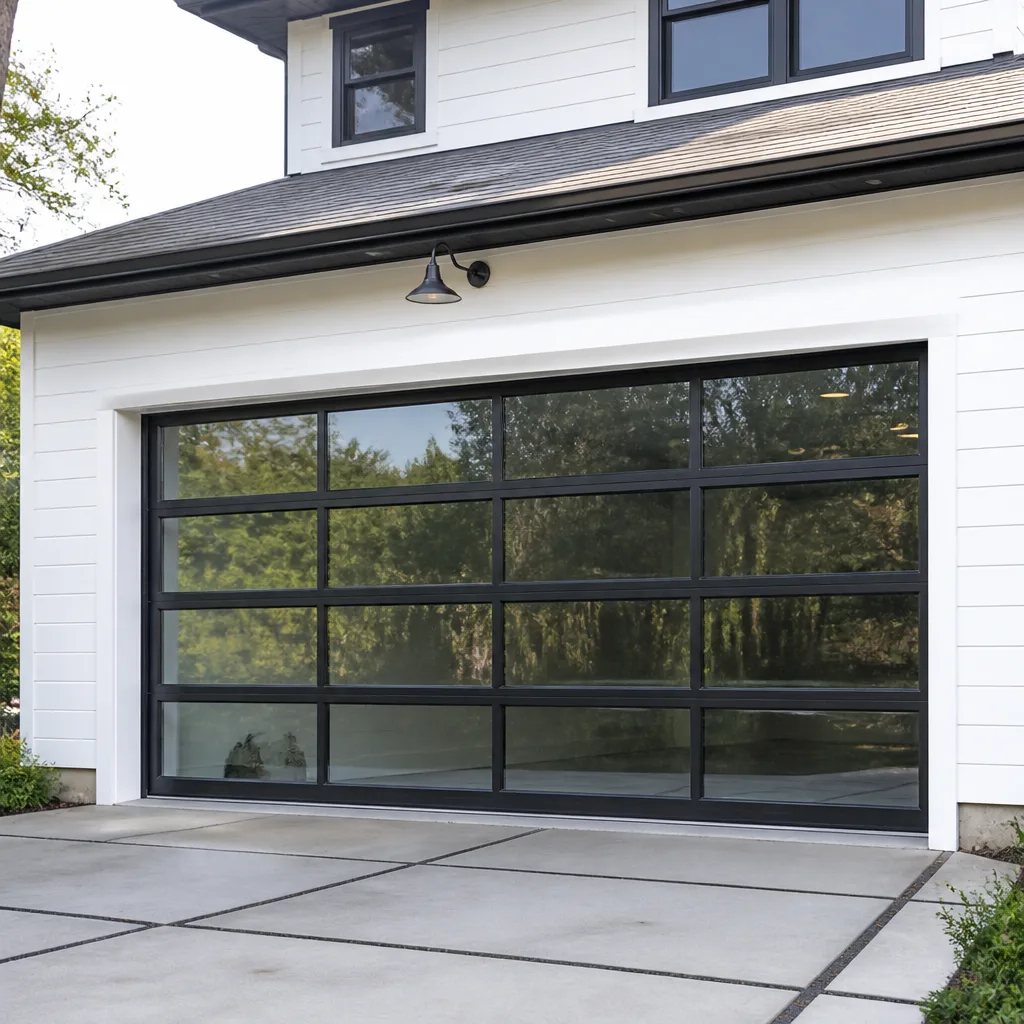 Full-view glass
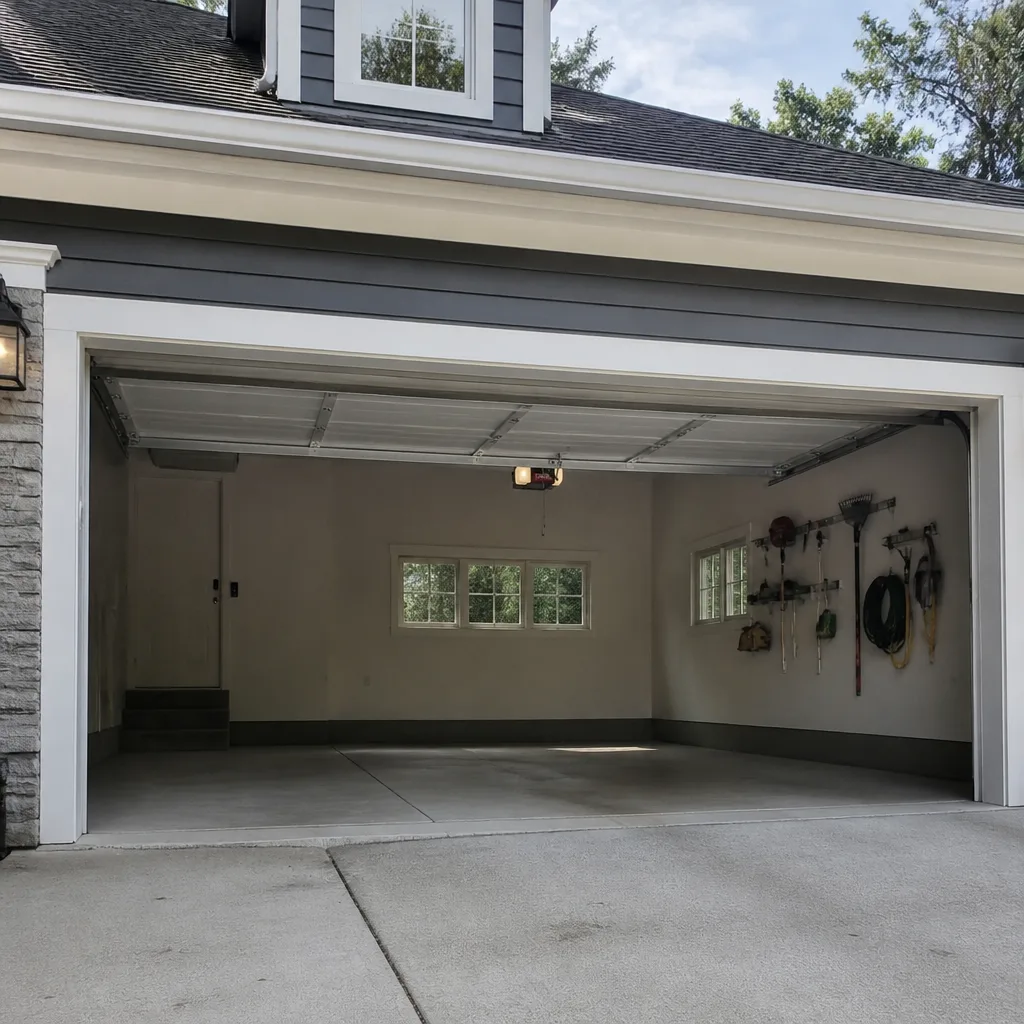 LiftMaster openers
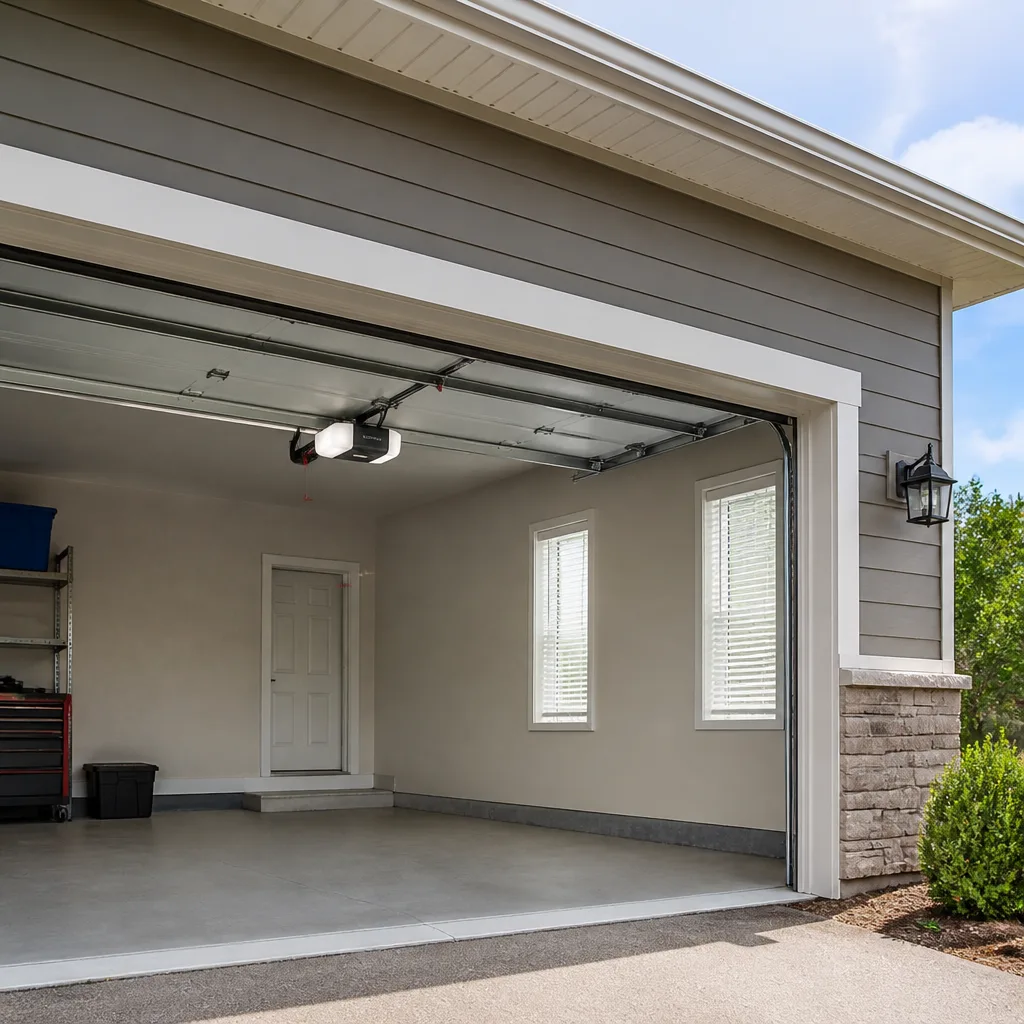 Chamberlain openers
Full 25-point door and opener safety check with every visit - springs, cables, rollers, tracks, and your LiftMaster or Chamberlain opener included
You get a price before we start. It does not change when the pro arrives.
Get your free estimateThe Complete Guide to Garage Doors in Indianapolis
Most garage door guides are written for a generic American homeowner. Indianapolis doesn’t get that courtesy. This city swings from single-digit cold snaps to humid summer afternoons, and the freeze-thaw cycles in between work on door hardware in a way that coastal or desert guides never account for. Soil movement alone can rack a track out of square in a single winter. What follows is a practical guide to garage doors in Indianapolis: which parts fail first and why, how your home’s age changes what will fit, how to judge a repair quote, and when to stop troubleshooting and call in a specialist. We’ve written it from the ground up for how doors actually behave here.
Quick Answer
Garage doors in Indianapolis fail faster than the national average at the bottom seal, the springs, and the steel panel edges because of repeated freeze-thaw cycles and high summer humidity. The single most misdiagnosed problem in this market is a frost-heaved concrete threshold, which mimics a broken door but is really a slab issue. Get the cause diagnosed correctly before you spend money on parts.
Styles & brands we work with
- Raised-panel steel
- Carriage house
- Modern flush
- Full-view glass
- LiftMaster openers
- Chamberlain openers
Table of Contents
- How Indianapolis Freeze-Thaw Cycles Wear Out Your Door
- Why Attached Garages Change the Stakes
- The Frost-Heaved Threshold Problem
- What Your Neighborhood’s Age Means for Door Compatibility
- Brand Availability and Parts Supply in the Indianapolis Metro
- What Garage Door Work Typically Costs in Indianapolis
- How to Choose a Garage Door Company
- Seasonal Maintenance for Indianapolis Doors
How Indianapolis Freeze-Thaw Cycles Wear Out Your Door
Indianapolis weather is hard on a garage door for a simple reason: water gets in, freezes, expands, and pushes things apart, then melts and repeats. Anything that holds a little moisture becomes a failure point. Understanding that pattern tells you which parts deserve attention and which ones usually hold up.
Bottom seals. The rubber or vinyl seal along the bottom of the door is your first line of defense against water and cold air. In a freeze-thaw climate it takes the most punishment of any part. Water collects under the door, freezes hard against the seal, and over a few seasons the rubber stiffens, cracks, or tears free from the retainer. A failing seal lets snowmelt and rain under the door, where it freezes and starts lifting the slab edge. If your seal feels hard or brittle instead of flexible, it’s near the end of its life.
Springs. Torsion springs carry the door’s weight and do the heavy lifting when you open it. Cold weather doesn’t break them directly, but it does make metal less forgiving, and the constant load cycling through humidity swings takes a toll. Springs are rated in cycles, not years, so a door that gets opened many times a day will wear its springs faster than a door that’s used once. When one breaks you’ll usually hear a loud snap; the door will suddenly feel extremely heavy.
Steel panels. The bottom panel of a steel door is the closest to ground moisture and the most likely to rust first. Indianapolis summers hit high humidity, and the winter cycle pushes water into any scratch or seam. Once rust starts on the bottom edge, it spreads. Galvanized and factory-finished panels resist it longer, but the bottom panel almost always fails first no matter how good the coating is.
What this means for you. Don’t judge your door by how the top half looks. Get down and look at the bottom seal, the bottom panel edges, and the mounts where the springs sit. That’s where the climate does its work.
Why Attached Garages Change the Stakes
Most Indianapolis-area homes have an attached garage, and that changes what a door failure actually costs you. A detached garage protects a car and some tools. An attached garage sits inside the building envelope, sharing a wall and often a ceiling with heated living space. When the door or the seals around it fail, the consequences go beyond a stuck car.
Insulation matters more here. An attached garage door that isn’t insulated becomes a giant hole in your home’s thermal boundary. Cold air pours in, heat escapes, and the shared wall stays cold. Insulated doors with a polyurethane or polystyrene core slow that transfer. If your garage sits under bedrooms or next to a kitchen, an insulated door is worth the extra cost, and it also helps control humidity inside the bay.
Carbon monoxide is the safety issue. If a car runs in an attached garage, exhaust has a path into the house through the door’s gaps, the wall sealing, and the vents. A well-fit door with an intact bottom seal and healthy weatherstripping keeps exhaust where it belongs. A door that’s hit, out of square, or missing seal strips lets exhaust creep in. This is one of the reasons we measure and re-measure an attached garage opening rather than eyeballing it.
Air and pest sealing. A door that doesn’t sit flat lets cold air in during winter and lets insects and rodents in year-round. The bottom seal and the perimeter weatherstrip work as a single system; if one is worn and the other isn’t, you’ll still get drafts.
Hinges and hardware wear faster. An attached garage typically gets more daily open-close cycles than a detached one because it’s the main entrance for many families. Nylon rollers and good hinge lubrication matter here, and they’re cheap insurance against bigger wears.
The Frost-Heaved Threshold Problem
This is the one we want you to remember. More misdiagnosed “broken doors” in Indianapolis come from the concrete under the door than from any single mechanical failure. The ground here freezes and thaws repeatedly through winter, and when water trapped under the slab freezes, it pushes the concrete up. That’s frost heave. A garage floor and threshold that rise a fraction of an inch will push against the bottom of the door and stop it from closing flush. The door isn’t broken. The slab is.
How it shows up:
- The door stops just short of the floor and reverses, as if it hit something.
- The seal looks compressed on one side but not the other.
- The door closes flush in summer but not in deep winter.
- One corner of the slab is visibly higher than the rest.
What it is not. A door that won’t close all the way is often reported as a damaged opener or a bent panel. Sometimes it is. But before you buy parts, check the floor line. Lay a straightedge across the threshold and look for a high spot.
What can be done about it. First, diagnose it correctly. A door can be adjusted up slightly, or a shallower seal fitted, to accommodate a small rise. A significant slab heave is a concrete problem, and the honest answer is that a garage door company shouldn’t pretend otherwise. What we can do is tell you whether the issue is the door or the slab, and price the door work honestly once you know which it is. This distinction is exactly the kind of thing a specialist catches and a handyman misses. Getting the cause diagnosed the first time is what saves you repeat calls.
What Your Neighborhood’s Age Means for Door Compatibility
Garage door compatibility is not one-size-fits-all. The size of the opening, the headroom under the ceiling, the style of the panels, and the wiring for an opener all vary depending on when a house was built. Indianapolis has three broad age bands, and each presents different issues.
Pre-1980s neighborhoods. Older homes often have single-car garages with low headroom and wood-frame openings that have settled. Door sizes can be non-standard, which means a replacement may need to be measured and built rather than pulled off a shelf. Torsion spring setups on older doors vary considerably, so a technician who knows older hardware matters. If the frame has racked from soil movement, tracks may need to be squared before a new door will sit flat.
1990s subdivisions. These are typically two-car garages with standard 16-foot doors and low-headroom torsion or extension springs. This is the most parts-available group, and replacement panels, seal kits, and openers are usually readily available. The main issue is that these doors are now old enough that the springs are at or near the end of their cycle life and the bottom seals are due for replacement.
Post-2010 builds. Newer homes often have taller openings, high-lift tracks, and smart openers with web-based apps. If you’re matching a new panel to an existing door, factory color and panel profile matter more here because neighbors and buyers notice. Openers in this group increasingly use battery backup and belt drives, and compatibility for add-on accessories is better.
What to have ready when you call. The width and height of your opening, the style of spring (torsion or extension), and a photo of the door’s interior with the door closed will help any company quote faster and more accurately.
Brand Availability and Parts Supply in the Indianapolis Metro
Brand availability is where a lot of generic advice breaks down. Some brands have wide local parts supply, so a broken carriage or spring can be sourced quickly. Others have long lead times on specialty panels or boards, and if a company doesn’t know your model, you wait. Knowing which side of that line your door falls on helps set expectations.
We’re factory-familiar with the brands you’re most likely to find on an Indianapolis door: LiftMaster, Chamberlain, Genie, Clopay, Amarr, Wayne Dalton, Craftsman, and Raynor. That matters less for the logo and more for speed: when a technician knows the model line, they can diagnose faster and order the correct part without trial and error.
Common local situations:
- A Clopay or Amarr steel door with a dented bottom panel. Panels are usually available in common sizes, but color and profile matching can take longer for older lines.
- A Wayne Dalton door with a broken torsion spring. Standard springs are usually available; unusual lengths may need to be fabricated.
- A Craftsman opener from an older home. Control boards and wall controls for older models can be scarce, so a like-for-like replacement is sometimes the surest path.
- Smart openers from LiftMaster and Chamberlain. Accessories and connectivity hardware are usually in good local supply.
If your door is an uncommon brand or an out-of-production model, lead times can stretch. A specialist company with trade focus usually knows which parts are available quickly and which aren’t, and will tell you before you commit. That’s the difference between a quote you can rely on and one that changes mid-job.
What Garage Door Work Typically Costs in Indianapolis
Exact prices depend on the door, the part, and the condition of the hardware, but it helps to have a realistic range in your head before you call. These figures are typical estimates for the Indianapolis market. The written estimate you receive is what sets the final price, and nothing should start until you’ve agreed to it.
- Spring replacement (one spring): typically about $180 to $340 per spring. Springs are usually replaced in matched pairs because they wear together, so a pair runs roughly twice that.
- Bottom seal replacement: typically $120 to $260 depending on door width and seal type.
- Panel replacement (one panel): typically $200 to $600 depending on size, material, and whether a matching color is still available.
- Tune-up and adjustment: typically $90 to $180, which covers track alignment, lubrication, and spring tension check.
- Opener repair: typically $150 to $400 depending on the component, from a gear and sprocket to a control board.
- New door installation: typically $900 to $2,800 for a standard single door and $1,400 to $4,000 for a double, depending on material, insulation, and window options.
These are estimates. The final number depends on what a technician finds when the door is open and the hardware is visible. Get your quote in writing, ask what’s included, and confirm whether the price is fixed once the cause is confirmed. A quote that’s vague on that point is the one that turns into a surprise.
How to Choose a Garage Door Company
A garage door is a mechanical system, and the company that works on it should know the whole system, not just one piece. General contractors and handymen often take door jobs as sidelines, which means they may not have the parts or experience when something unusual comes up. Here’s what to look for.
- Single-trade focus. Ask directly whether they work on garage doors as their main trade or as a sideline. A company that does doors all day has seen your failure before.
- Brand familiarity. Ask whether they’re familiar with your door and opener brand. If they hesitate on yours, ask how they’d source parts.
- Whole-system capability. Can they handle the spring, the panels, the tracks, and the opener? If they hand parts of the job to a subcontractor, you’ll be coordinating more than one company.
- Written estimate before work. You want a scope and a number in writing before anything is disassembled. That’s also where insurance and licensing questions should be answered.
- Clear diagnosis. Ask what caused the failure, not just what needs replacing. If the answer is vague, keep asking. A company that can’t explain the cause probably hasn’t found it.
- Realistic scheduling. For repair work, same-day service is reasonable to ask about. For installation or replacement, the work is measured, ordered, and scheduled, so don’t expect same-day there.
For a closer look at repair scope and what’s involved, see our garage door repair page. If the problem is the opener rather than the door, garage door opener repair covers what’s involved.
Seasonal Maintenance for Indianapolis Doors
A little maintenance through the year pays off in this climate. You don’t need to be handy, but a few checks each season will catch small problems before they become expensive.
Spring (after the freeze lifts). Look at the bottom seal for cracks or stiffness. Check the bottom panel for rust along the lower edge. Clear any debris from the threshold and check whether the floor line has shifted after winter. Test the door’s balance: disconnect the opener and lift the door by hand to about waist height. It should stay there. If it drops, the springs may need attention.
Summer (humidity season). Lubricate hinges, rollers, and the torsion spring with a door-specific lubricant. Check the weatherstripping around the perimeter. High humidity can make wood frames swell, so check that the door still closes smoothly and doesn’t stick. Look at the opener’s drive belt or chain and listen for new noises.
Fall (before the cold). This is the most important check. Confirm the bottom seal seats flush along the whole width. Look for gaps under the door and check the threshold for heaving. Check that the safety reverse feature works (put a piece of wood under the door and confirm it reverses on contact). Clear leaves and debris from the tracks.
Winter (cold snaps). If the door gets stiff or makes new noises, don’t force it. Cold makes metal less forgiving, and forcing a door that’s binding can damage the opener. If it stops closing partway, check the floor line first before assuming a mechanical fault.
A safety note. Torsion springs and the cables that run with them are under extreme tension. They can cause serious injury if handled incorrectly. We don’t recommend adjusting, removing, or replacing springs or cables yourself. Diagnose the symptom, then call a trained professional. We’re happy to talk through what you’re seeing. Ironwood Garage Door Repair works on the whole system, from the spring to the smart opener.
Common Mistakes to Avoid
- Assuming a door that won’t close is broken. In Indianapolis, frost heave at the threshold frequently mimics a door failure. Check the floor line before you buy parts. If the slab has shifted, a new spring won’t fix the problem.
- Replacing one spring. Springs are rated in cycles and wear together, so replacing one leaves the older spring to fail next. A matched pair usually makes more sense. Worth asking about.
- Ignoring the bottom seal. It’s the part that fails first in this climate, and a worn seal lets in water and cold air. It’s a cheap fix that protects the panel and the slab edge.
- Hiring a generalist for a specialist’s job. Handymen take door jobs, but they often don’t have the parts or the diagnostic depth for older or uncommon brands. A misdiagnosis costs more than the job would have.
- Forcing a binding door. If the door sticks, don’t keep hitting the opener button. Forcing it can strip the opener’s gears and bend the rail. The cause usually isn’t the opener.
- Buying a replacement door without measuring headroom. Pre-1980s homes in Indianapolis often have non-standard openings and low headroom. A door that won’t fit the track setup is a return.
- Accepting a verbal price. Get the scope and the number in writing before disassembly starts. That’s the only way to protect yourself from an invoice that’s bigger than the quote.
See the difference
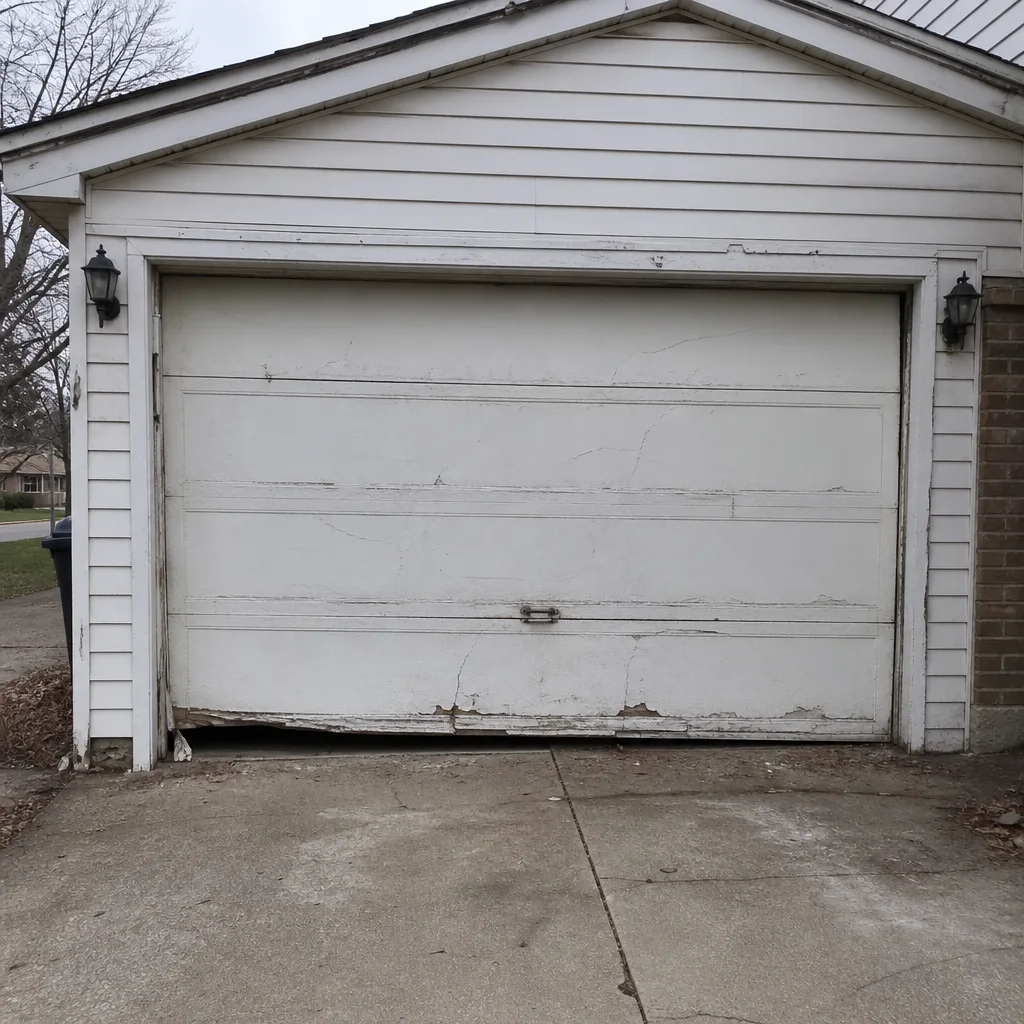 Before
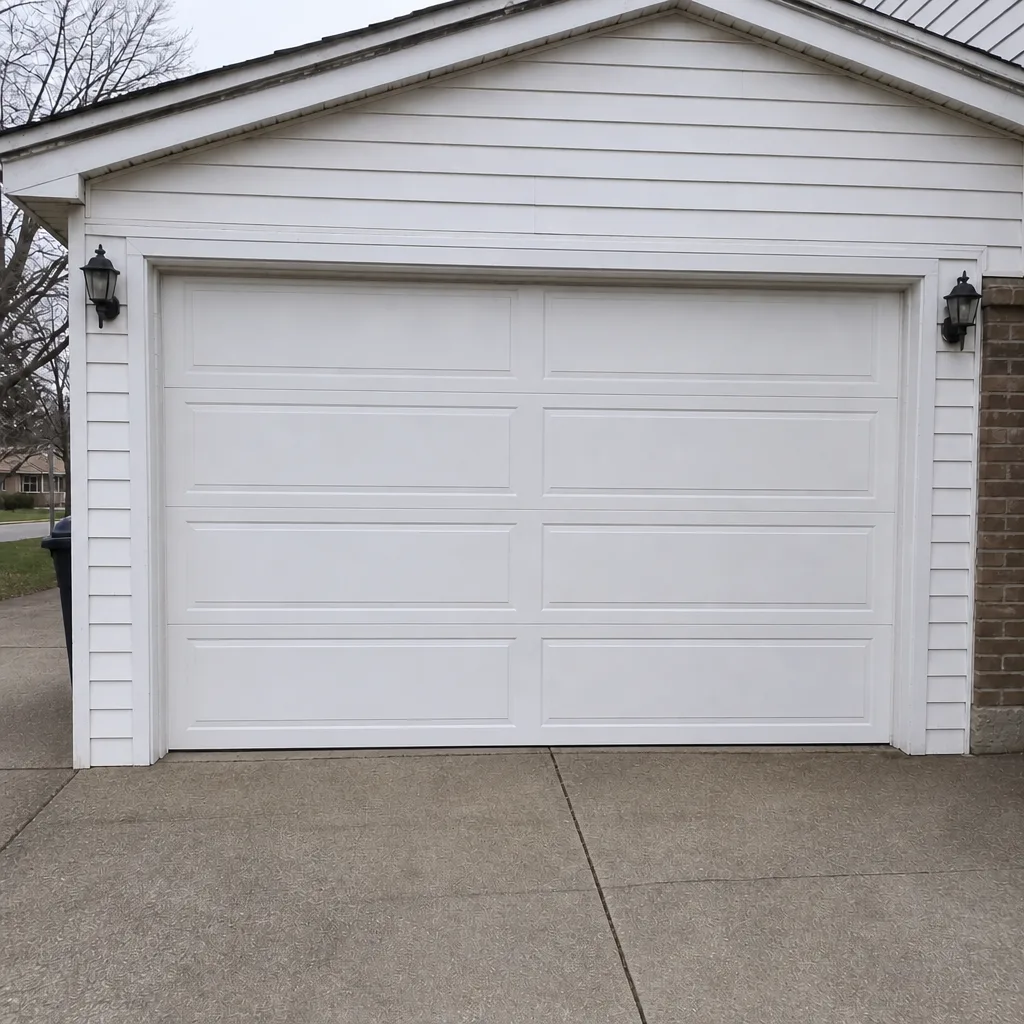 After
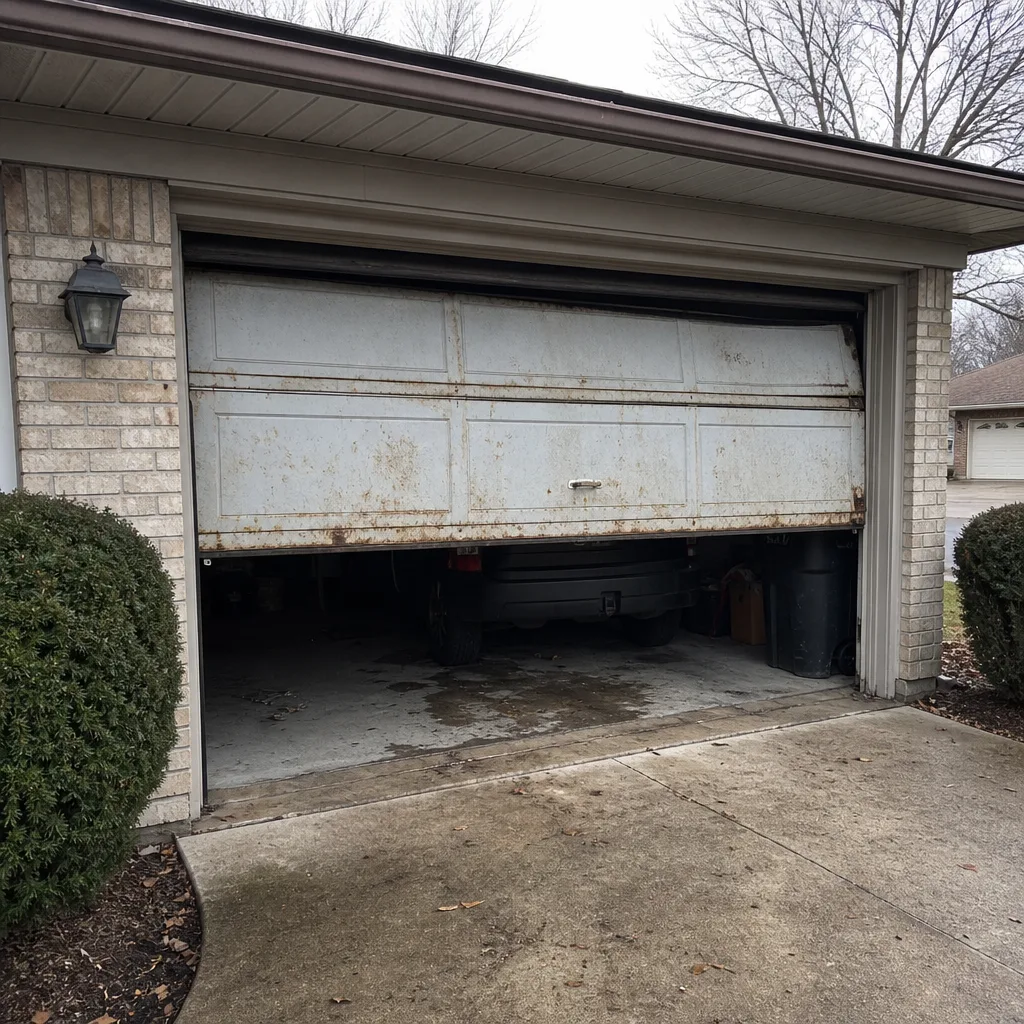 Before
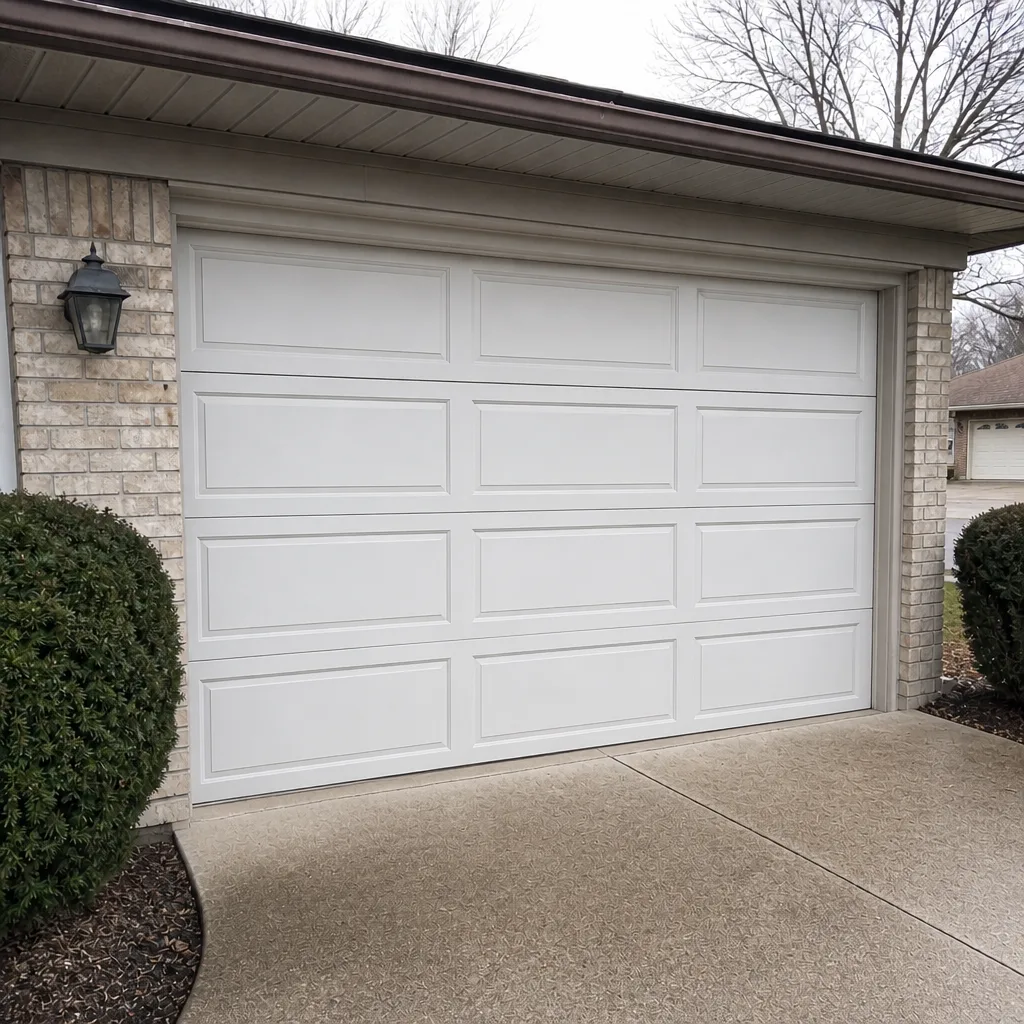 After
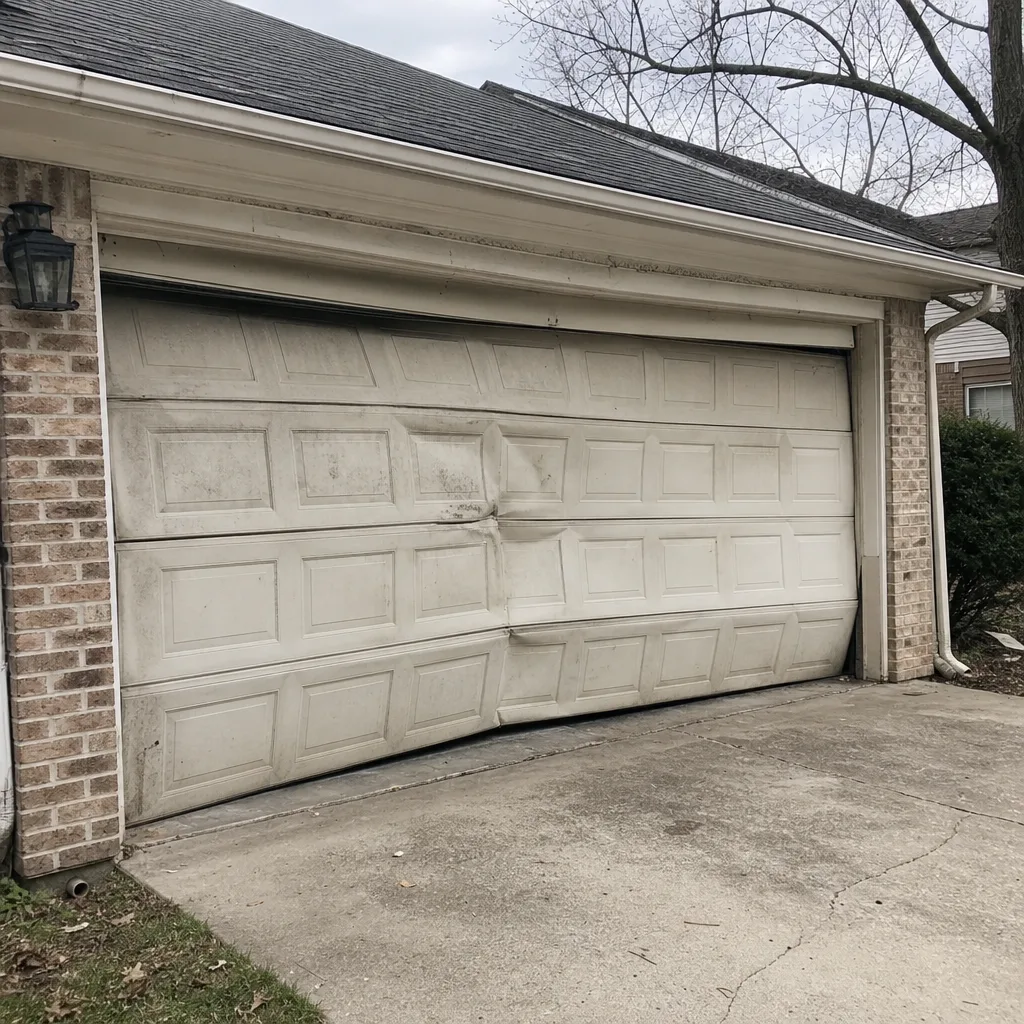 Before
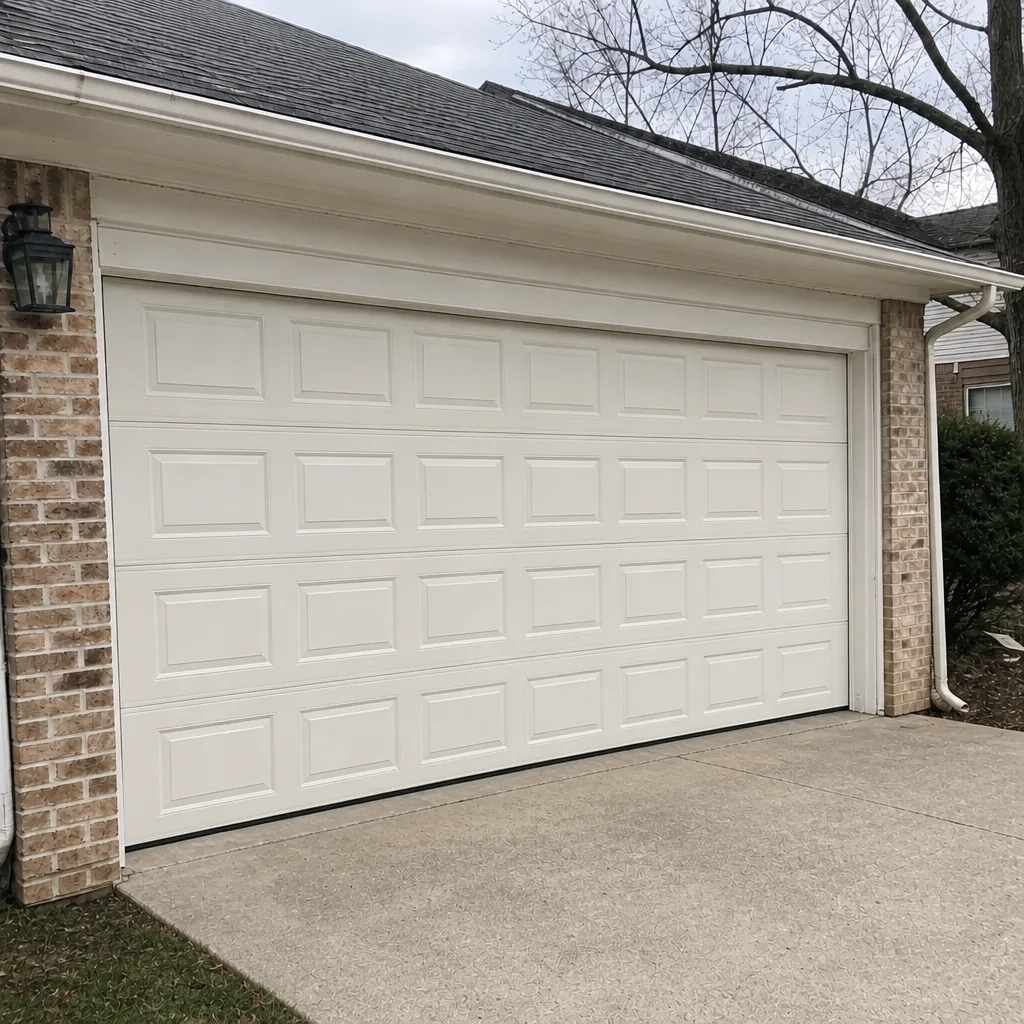 After
When to Call a Professional
Some jobs are straightforward checks; others aren’t. Call a professional when a spring breaks, when the door is visibly out of square, or when the door comes off its track. Call when the opener runs but the door doesn’t move, when the door reverses for no clear reason, or when you hear a loud snap from the spring area. Call when the bottom panel is rusting through or the bottom seal has failed. And call when you’re not sure whether the problem is the door or the slab, because that distinction matters and it’s easy to get wrong.
Garage doors are all we do, and we work across the major brands: LiftMaster, Chamberlain, Genie, Clopay, Amarr, Wayne Dalton, Craftsman, and Raynor. Our technicians have up to 9 years of experience. Ironwood Garage Door Repair offers free estimates in Indianapolis – call (844) 834-1874. The price is agreed before any work starts, so you’ll know what you’re spending before we begin.
Frequently Asked Questions
Typical estimates run about $180 to $340 for a single spring, $120 to $260 for a bottom seal, $200 to $600 for a single panel, and $90 to $180 for a tune-up and adjustment. Opener repairs usually fall between $150 and $400 depending on the part. The written estimate sets the final price. Call (844) 834-1874 for an exact quote – estimates are free.
The most common cause in this climate is a frost-heaved concrete threshold. Water under the slab freezes, pushes the concrete up, and the door hits the raised edge and reverses. Check the floor line with a straightedge before assuming a mechanical failure. If the slab is the issue, a door adjustment may help for small rises; a large heave is a concrete problem. It’s worth having a professional tell you which it is.
For repair work, same-day service is often possible if you call early. We answer 24/7, and fast dispatch runs from 7am to 7pm. Installation and replacement are measured, ordered, and scheduled, so those aren’t same-day. Call (844) 834-1874 to find out what’s available for your door.
No. The price is quoted and agreed before any work starts, so the written estimate is what you pay. If a technician finds something extra during diagnosis, they explain it and get your go-ahead before adding it. You won’t get a bill bigger than the quote you accepted. Call (844) 834-1874 for a free estimate.
Yes. We’re state-licensed, insured, and work only on garage doors and openers. Our technicians have up to 9 years of experience and are familiar with the brands you’re likely to have. If you’d like credential details, ask when you call. We’ll be glad to answer.
Repair usually makes sense when the problem is a single part: a spring, a panel, a seal, or an opener component. Replacement makes more sense when the door is out of square, severely rusted through the bottom panel, or when parts for an older or uncommon model are hard to source. A free estimate will give you the two numbers side by side. Call (844) 834-1874 to set a measurement visit.
The Bottom Line
Garage doors in Indianapolis live in a demanding climate, and the smartest thing you can do is get the cause right the first time. Freeze-thaw cycles wear down seals, springs, and bottom panels faster here than in milder regions. Frost-heaved slabs mimic mechanical breakdowns. Older neighborhoods present non-standard openings, and newer ones demand brand and color matching. The universal rules still hold: get a written estimate, don’t force a binding door, and don’t handle springs or cables yourself.
If you want the job done right the first time, Indianapolis homeowners call a company that works on nothing but doors. Call Ironwood Garage Door Repair at (844) 834-1874 for a free estimate. We answer 24/7. Fast dispatch from 7am to 7pm, Sunday through Friday.
Written by the team at Ironwood Garage Door Repair.